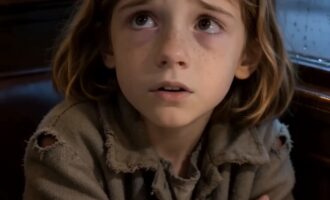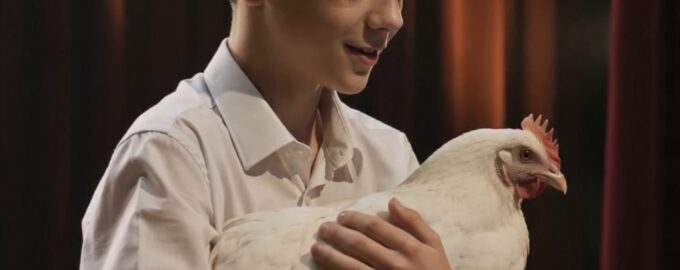
The stage lights were too bright for twelve-year-old Noah. He stood in the middle of a televised talent show, wearing his only clean shirt and holding a white hen tightly against his chest.
At first, people laughed.
The judges exchanged looks. One of them leaned toward the microphone and asked, “Is this supposed to be a joke?”
Noah lowered his eyes, but he did not run away.
“No, sir,” he said quietly. “Her name is Lily.”
The audience laughed again, softer this time. The boy’s hands tightened around the hen.
Another judge smiled politely. “And what is Lily’s talent?”
Noah swallowed.
“She kept us alive.”
The room changed.
He explained that after his father left, his mother became ill. They had almost nothing left. The hen was supposed to be sold, but every morning Lily laid one egg. Noah sold some, kept some, and used the money to buy bread and medicine.
“I didn’t come here to make people laugh at her,” he said. “I came because my mother said every life has worth, even a small one.”
The judges fell silent.
Then Noah began to sing. It was not a perfect voice. It shook at first. But the song was honest, warm, and full of everything he had carried alone for too long. The audience stopped laughing. Some people wiped their eyes.
When the song ended, no one spoke for a moment.
Then the oldest judge stood up and applauded.
Soon the whole hall followed.
Noah looked confused, still holding Lily close.
After the show, the judge found him backstage. He gave Noah a card and said, “Your voice needs training. Your family needs help. We will take care of both.”
Noah did not win because he brought a hen.
He won because he walked onto a stage where people expected a joke — and reminded them what dignity looks like.