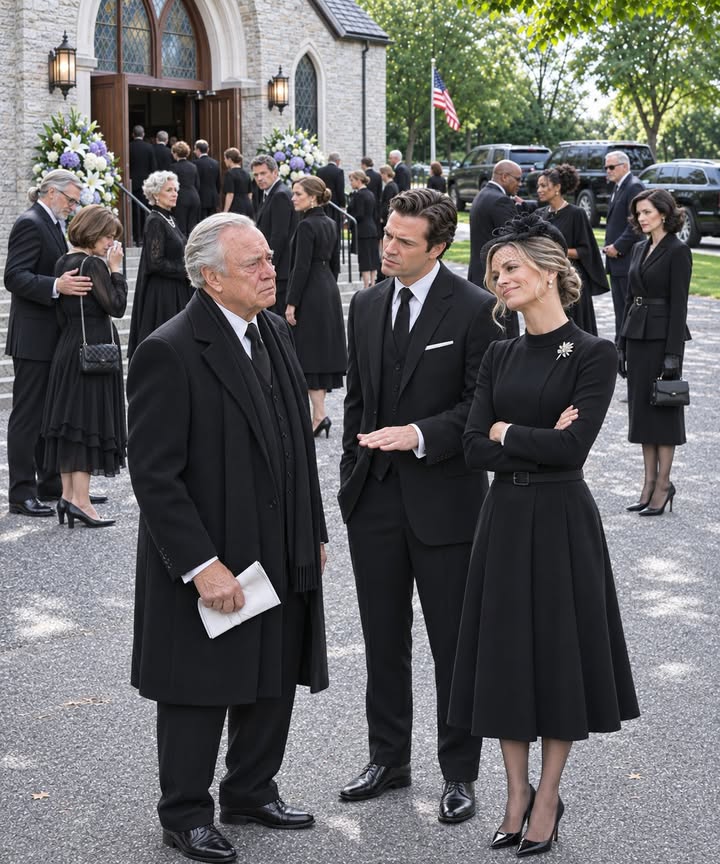
“Dad, we’re stopping your allowance. From now on, you’re on your own.”
My son said it less than an hour after we buried my wife, Dorothy. Trevor, forty-three years old, led me away from the last relatives outside the church and looked like a stern adult about to lecture a misbehaving child. Beside him, my daughter-in-law Kendra smiled as though they had just achieved something wonderful.
“Starting next month, you’ll need to cover your own expenses,” Trevor said. Kendra added, “Gerald, you’re seventy-one. We can’t keep supporting your lifestyle forever.”
The Allowance That Wasn’t
For three years, Trevor had sent $2,000 to my account every month and called it my allowance. In truth, it was heavily discounted rent. The six-bedroom home where he lived with Kendra and their children belonged to my company, Hollis Property Holdings.
While Dorothy and I lived in the guest apartment behind the main house, we paid the property taxes, insurance, repairs, landscaping, and pool maintenance. That saved Trevor’s family almost $80,000 a year. I also put $4,000 of my own money every month into a college fund for my grandchildren, Sophie and Jack.
I could have said all of that right there. But grief had taken my strength to argue.
“You’re right,” I told him. “Everyone should be responsible for their own expenses.”
His shoulders relaxed. He patted my arm as if I’d passed a test. Neither of them understood what my agreement really meant.
Six Words From Dorothy
Back in the guest apartment, Dorothy’s unfinished novel still lay beside her chair, her glasses across the open pages. On her dresser sat a sealed envelope with my name in her handwriting.
That night, I opened it. Inside was one line: Gerald, please start living for yourself.
I remembered what she had said months earlier, as I wrote yet another check for Trevor’s household. “There’s a difference between helping someone and teaching them they’re entitled to everything you have.” And later: “Generosity becomes dangerous when people mistake it for weakness.”
I had defended our son then. Now I understood. Dorothy had never wanted me to punish Trevor. She wanted me to stop shielding him from the consequences of his own choices.
A Careful Plan
I called Patricia Quinn, who had handled our legal and financial affairs for twenty years.
“I don’t want revenge,” I told her.
“I asked what you do want.”
“I want to stop paying for their life.”
On Thursday, Patricia came with her weathered leather briefcase, and we reviewed the deed, lease, bank records, and trust documents. The $2,000 was legally rental income. The grandchildren’s education fund was irrevocable, so Sophie and Jack would keep it whatever their parents did.
Our plan was simple and fair:
- The lease would run until its expiration date and would not be extended.
- I would end my payments for their personal expenses, extra credit card, pool service, lawn care, and housekeeping as each commitment ended.
- No locks would be changed, and no belongings would be put outside.
I wanted responsibility, not chaos.
The Silence After the Note
That Saturday, while Trevor and Kendra were at brunch, I packed a suitcase for the lake cottage. I left my keys on their kitchen island with a note:
Trevor, at your mother’s funeral, you told me everyone should cover their own expenses. I thought about it, and you were right. As of today, I’m no longer paying for your household. Have your lawyer contact Patricia Quinn about the house. Dad
At 4:12 that afternoon, my phone started ringing. By six, there were forty-seven missed calls. By midnight, there were 140. Some demanded to know why the payments had stopped. Others asked how I could leave without explaining.
Not one asked how I was coping without Dorothy.
What Came Next
I let the phone ring. At the lake, I slept past sunrise for the first time in years, and I walked the shore with Dorothy’s scarf around my neck.
In the following weeks, Trevor’s lawyer called Patricia. The conversation was tense at first, then practical. Trevor and Kendra learned what the house really cost, and what they had never paid for. They could stay under a new lease at a fair market rent, and they would handle their own bills.
It was hard on them. Kendra gave up the housekeeper. The pool service ended. They had to build a budget for the first time.
Then, one gray afternoon in late autumn, Trevor drove to the cottage alone. He stood on the porch with his hands in his pockets, looking smaller than he had outside the church.
“I never asked how you were doing,” he said. “At the funeral, or after. I’m sorry, Dad.”
It was the first thing he’d said in months that wasn’t about money. I made him a cup of coffee, and we talked about his mother for two hours.
Things between us are not perfect, and they may never be what they once were. But Trevor pays his rent on time, and Sophie and Jack still have their college fund. I’m learning how to spend my days on the things Dorothy hoped I would.
I finally started living for myself, just as she asked.